Universal Design Policy
Body Text
CEO's foreword
The Convention on the Rights of Persons with Disabilities (CRPD 2006) defines Universal Design as "the design of products, environments, programs and services to be usable by all people to the greatest extent possible".
In health infrastructure, universal design means creating spaces that are functional for everyone and that address physical, sensory and cognitive needs.
All of our capital projects embed universal design principles as an underlying requirement. However, we’ve made a commitment to exceed compliance and minimal standards to ensure universal design principles underpin all of our projects – from planning, design, and delivery.
Our universal design policy is a first for any government authority in Australia. It recognises that human ability is enabled, supported and encouraged by universally designed environments that provide everyone with the opportunity to participate unassisted or with minimal support.
The policy also includes a Universal Design Charter, part of a Victorian Government strategy to increase awareness and knowledge about universal design in the community. It will apply to all projects delivered by VHBA, ensuring that we continue to deliver innovative and equitable social infrastructure for all Victorians.
Robert Fiske
CEO, Victorian Health Building Authority
“Let’s face it, as designers, we often generate and evaluate ideas based on what we know. We strive to make experiences that solve needs, work well with the human body, and improve lives.
But here’s the problem: If we use our own abilities as a baseline, we make things that are easy for some people to use, but difficult for everyone else.
There are 7.4 billion people in the world. Our ambition is to create health environments that are physically, cognitively, and emotionally appropriate for each of them. It starts with seeing human diversity as a resource for better designs.”
Stefano Scalzo
Director, Planning and Development, Victorian Health Building Authority
Purpose
The purpose of this policy is to build the capacity of the Victorian Health Building Authority by enabling the coherent use of universal design to deliver innovative and equitable solutions in a wide range of health infrastructure.
Vision
Our vision is to:
- reinforce social equity in the health environment through the incorporation of universal design principles into all future health infrastructure and program developments in Victoria; and
- to embed universal design policy as a code of practice as opposed to a set of considerations.
Scope
The policy applies to all Department of Health employees and health service providers in the management of publicly funded health sector assets. Health service providers comprise corporate bodies established under the following Victorian legislation:
- Secretary to the Department of Health established under the Public Health and Wellbeing Act 2008
- Public entities established under the Health Services Act 1988
- Ambulance Victoria established under the Ambulance Services Act.
Policy statement
The Victorian Health Building Authority, on behalf of the Department of Health, is committed to:
- providing equitable access to health sector infrastructure for Victorian people of all abilities
- exceeding minimum standards to ensure universal design provisions be included and applied to planning schemes and delivery of health infrastructure.
- developing the capabilities of the VHBA workforce through best practice guidance/leadership
- promoting a culture of inclusion by integrating universal design principles into compliance commitments/requirements.
- delivering innovative solutions to anticipate and the needs of all end users through design and implementation of development initiatives.
Principles
The seven guiding principles of universal design are:
- Equitable use
The building/ process is usable by anyone. It does not disadvantage, stigmatize or privilege any group of users.
- Flexibility in use
The building accommodates not only a wide range of individual user preferences but also users’ varying functional abilities.
- Simple and intuitive
How to use the building/process is easy to understand regardless of the user’s experience, knowledge, language skills or concentration level.
- Perceptible information
The building/process communicates all necessary information effectively to all users regardless of ambient conditions or the users’ varying intellectual or sensory abilities.
- Tolerance for error
The building/ process minimises hazards and adverse consequences of accidental or unintended actions by all users.
- Low physical effort
Everyone can use the building/process efficiently, comfortably and with minimal fatigue.
- Size and space appropriate for use
Appropriate size and space is provided for approach, reach, manipulation, and use regardless of user’s body size, posture, or mobility.
Regulatory context
- Convention on the Rights of Persons with Disabilities (CRPD)
- The Charter of Human Rights and Responsibilities Act 2006
- National Disability Strategy 2010-2020
- Victorian State Disability Plan 2017-2020
- Victorian Disability Act 2006
- Disability Discrimination Act 1992
- Victoria’s 30-year infrastructure strategy 2017-2037
- Statewide design, service and infrastructure plan 2017-2037.
Supporting and related content
- Designing for Diversity (Department of Health)
Universal Design Charter
This charter is the result of a collaborative effort among a group of Victorian Government professionals with experience and expertise from working theoretically and practically in the field of universal design in all departments.
The charter is an initiative to be seen as part of a Victorian Government strategy to implement and gain a greater awareness and knowledge about universal design in society.
The Convention on the Rights of Persons with Disabilities (CRPD 2006) defines universal design as "the design of products, environments, programs and services to be usable by all people to the greatest extent possible" (CPRD 2006), combining a human rights perspective and a perspective for sustainable development. This charter refers to the convention in the rationales below.
The Victorian Health Building Authority is based on a shared goal to encourage strong social cohesion. In an increasingly globalised world, both the Victorian Government and the Australian Government face the same challenges; empowerment of the elderly, increased employment, longer participation in work life, quality on health services, and inclusion of neglected structurally discriminated groups.
Equity
Universal design builds on the concept of accessible design, going further than meeting minimum legislative standards by accommodating not just some people, but all people, to the greatest extent possible, all of the time.
Respect
People are diverse and everybody has the same rights to access and participation in society. All people regardless of ability should have equal opportunities to take part in society. This should be taken into account by private and public entities which provide goods and services to the public.
Participation
Universal design principles into all future infrastructure and program developments in Victoria reinforces social equity in the built environment, to achieve participation and empowerment for all. Universal design fosters societal capacity to support the development of its members, as well as resources to support interaction. To achieve participation and empowerment for all through universal design.
Sustainability
Designs are sustainable when all users are acknowledged and recognises a range of human capabilities. Cross-sectorial and interdisciplinary work to ensures the most environmentally and economically sustainable solutions through universal design. To ensure sustainable solutions through universal design.
Responsibility
To ensure that government takes responsibility and stimulate the development of universal design policies and strategies. Universal design is an important strategy for all kind of organisations striving to operate in a socially responsible manner.
Awareness
To increase understanding of the benefits of universal design within the population. Diversity comprises acceptance and respect. It means understanding and acknowledging that everyone is unique, and that this is beneficial for the development of humanity. To raise the importance of diversity in society through universal design.
Collaboration
Universal design accounts for the needs of all intended users, encouraging cross-sectorial and interdisciplinary work to ensure the most environmentally and economically sustainable solutions. User representatives should be involved in planning, design and evaluation to ensure equitable usability in the solutions developed.
Enable skip links
Yes
Documents
Universal Design Policy (Word)
-

-

- 1.51mb | 07 June 2021
Universal Design Policy (PDF)
-

-
-
- 0.48mb | 07 June 2021
Heading
Documents
Content category
Promo grid image(632 x 246px)
VHBA-Health-Yarram-District-Integrated-Health-Service-exterior-panoramic-side-view-promo632x246.jpg
Promo Grid Title
Universal Design Policy
Last Updated
Mental Health Prevention And Recovery Care Unit Part B: Health facility briefing and planning
Documents
Heading
Documents
The Mental Health Prevention And Recovery Care Unit Part B: Health facility briefing and planning guideline has been developed for use by project staff, architects, planners, engineers, project managers and other consultants, and for end users.
It is intended to assist with the planning and design of a unit that will be fit for purpose in accordance with its designated service role and defined catchment population.
The guideline outlines requirements for the planning and design of a Mental Health Prevention and Recovery Care service and must be read in conjunction with generic requirements and Standard Components as described in Parts A, B, C and D of the Australasian Health Facility Guidelines.
Overview of Mental Health Prevention And Recovery Care Unit Part B: Health facility briefing and planning
Introduction
- Preamble
- General
- Terminology
- Therapeutic environment
Policy framework
- Background
- Mental Health Act
- Consumer rights
- Operational guidelines
- Gender sensitivity and safety
- Description of unit
- Planning
- Operational policies
- Planning models
- Design requirements
- Staff and support areas
- Consumer residential areas
- Support area
- Functional relationships
Design
- General
- Building strategies
- Access
- Parking requirements
- Disaster planning
- Infection control
- Environmental considerations
- Space standards and components
- Safety and security
- Finishes
- Fixtures and fittings
- Building services requirements
Components of the unit
- Standard components
- Non-standard components
Attachment 1: Schedules of Accommodation
- Generic youth 10-bed PARC
- Generic adult 10-bed PARC
- Generic 10-bed extended care PARC
Attachment 2: Functional relationships diagram
Content category
Promo grid image(632 x 246px)
VHBA-Mental-health-Mental-health-prevention-and-recovery-care-unit-promogrid-632x246.jpg
Promo Grid Title
Mental Health Prevention And Recovery Care Unit
Last Updated
St Vincent’s Hospital emergency department mental health, alcohol and other drugs hub
The emergency department mental health, alcohol and other drugs hub – at St Vincent’s Hospital Melbourne – is one of six new hubs being delivered across the state.
The six hubs are part of the Victorian Government’s $32 million investment to better support Victorians experiencing urgent mental health, alcohol and drug issues.
Delivering Victoria’s biggest ever investment in health infrastructure
Documents
We’re the Victorian Health Building Authority, and we’re responsible for planning and delivering the Victorian Government’s multi-billion-dollar health infrastructure program.
We’re currently planning and delivering over 125 health, mental health and aged care projects, worth almost $8 billion. This includes planning, building and upgrading metropolitan and regional:
- hospitals and ambulance stations
- residential aged care facilities
- mental health facilities
- additional alcohol and other drug rehabilitation facilities
- replacing and upgrading engineering infrastructure and medical equipment.
Through strong partnerships with health services, construction and design partners, local and federal government and local communities, we provide innovative and sustainable solutions to ensure our health system meets the current and future needs of all Victorians.
We also play a critical role in the ongoing management of $16.6 billion of existing Victorian health assets.
Biggest ever investment in health infrastructure
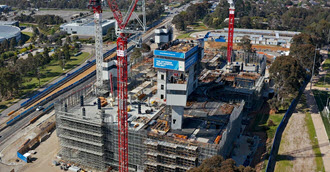 Aerial image of the Victorian Heart Hospital during construction 2021
The 2020-21 Victorian State Budget made an investment of $1.87 billion in health infrastructure upgrades.
This investment formed part of Victoria’s Jobs Plan, aimed at:
- getting Victorians back to work
- building opportunity
- supporting industry and growth
- supporting every corner of our state.
More than 4,100 jobs will be created during the peak of construction, helping to support Victoria’s economic recovery.
Upgrading and building hospitals and health facilities
We have $7.3 billion of health infrastructure projects and grants in planning and delivery. These include the:
- $1.5 billion for new Footscray Hospital, the largest ever health infrastructure investment in Victoria
- $562 million for the Frankston Hospital redevelopment
- $470 million Regional Health Infrastructure Fund
- $229.3 million for the Goulburn Valley Health Shepparton Hospital redevelopment
- $217 million for the Latrobe Hospital expansion – stage 3A
- $200 million Metropolitan Health Infrastructure Fund
- $162.7 million for the second stage of the Northern Hospital expansion
- $115 million to expand Wonthaggi Hospital.
We’re also progressing the planning on $1.22 billion of health projects announced in the 2020-21 Victorian Budget including:
- $541.6 million to redevelop and expand the Ballarat Base Hospital
- $384.4 million to redevelop Warrnambool Hospital
- $75 million to secure a site for the new Melton Hospital
- $66 million to begin purchasing land and commence design development for the Community Hospitals Program
- $10 million to plan the redevelopment of the Royal Melbourne Hospital at Parkville’s Melbourne Biomedical Precinct, as well as an additional site for the Royal Melbourne and Royal Women’s hospitals at the Arden Precinct.
Therapeutic and safe mental health care facilities
We have over $740 million mental health infrastructure projects and grants in planning and delivery, including:
- $492 million Mental Health Beds Expansion Program
- $52.1 million for three new regional alcohol and drug residential rehabilitation facilities
- $20 million Mental Health and Alcohol and Other Drugs Facilities Renewal Fund
- $11.9 million North West Metropolitan Youth Prevention and Recovery Care (YPARC) centre in Parkville
- $8.4 million Women’s Prevention and Recovery Care (PARC) centre in St Albans.
Modernising Victoria’s public sector residential aged care
We’re modernising public residential aged care, with over $318 million of aged care projects and grants in planning and delivery, including the:
- $81.58 million Wantirna residential aged care facility
- $134.6 million Kingston Centre aged care redevelopment
- $10 million Rural Residential Aged Care Facilities Renewal Program.
Our partners
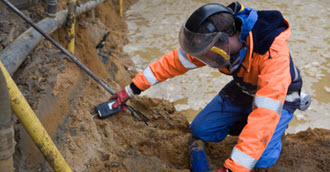
We work with organisations with specialist expertise in health service design and planning, architecture, engineering, construction, project management, property, and asset management to deliver world-class, innovative and sustainable health infrastructure.
Want to work with us? Find out more about our procurement process.
Subscribe to stay up to date
Stay up to date on all our announcements and upcoming projects and tenders by signing up to our eNews.
Video transcript
IMAGES: an animation of the Victorian Health Building Authority logo displays
Voice-over: We’re the Victorian Health Building Authority
IMAGES: montage of aerial view of Monash Hospital emergency department redevelopment; an architectural plan; mental health workers exploring a prototype of a bedroom module; aerial of Sunshine Hospital emergency department; construction workers cementing basement of Victorian Heart Hospital
Voice-over: We’re planning and delivering the Victorian Government’s biggest ever multi-billion-dollar investment in health infrastructure
IMAGES: montage of hybrid operating theatre at Northern Hospital; worker with nail gun; community engagement session at Footscray; Community Hospital community consultation; garden courtyard at Bendigo Hospital; aerial of greater Ballarat with artist impression of new hospital
Voice-over: Partnering with service providers, industry and the community to develop innovative and sustainable health facilities for our growing communities.
IMAGES: montage of workers at concrete pour; aerial of Victorian Heart Hospital construction
Voice-over: Creating thousands of new jobs and supporting our state’s economic growth
IMAGES: Aerial of St George’s Residential Aged Care facility; indigenous man and female health worker; aerial view of artist impression of new Footscray Hospital
Voice-over: To help keep Victoria one of the world's most liveable places, now and into the future
A sliding transition screen then displays the Victorian Health Building Authority logo and the web address vhba.vic.gov.au
Final frame of Victoria State Government logo and text ‘Authorised by the Victorian Government, 1 Treasury Place, Melbourne’
End of transcript.
Content category
Promo grid image(632 x 246px)
Woman-on-construction-site-promo-grid-632x246.jpg
Promo Grid Title
We are the Victorian Health Building Authority
Last Updated




Last updated: 02 April 2026